The idea
What is a coolcation?
A coolcation is a holiday chosen for the temperature, not despite it. Instead of chasing the hottest beach on the map, you go where summer is mild, the light lasts all day and the air smells of pine and salt.
The concept
Chasing 19°, not 39°For most of the last century, the summer holiday formula was simple: go south, get hot, come home tanned. Then the heatwaves arrived. Southern Europe now regularly passes 40°C in July and August — and a growing number of travellers are flipping the formula. They book coolcations: trips north and to higher latitudes, where summer is something you can be outside in all day.
The word blends cool and vacation, and the idea is bigger than avoiding sunburn. A coolcation means long hikes without wilting, city walks at midday, cold swims between sauna rounds, and evenings that stay light until midnight. You trade the siesta you never wanted for a summer that actually feels like summer.
And nowhere does the concept fit better than Estonia — a small, forested Baltic country whose natural summer setting is exactly what the heat-fleeing traveller is looking for.
Why Estonia is the ideal escape
Six reasonsThe temperature is the point
Estonian summer holds a gentle 15–25°C — warm enough for swimming and street cafés, cool enough to hike at noon and sleep under a duvet at night.
Twenty hours of daylight
Around midsummer the sun barely sets and the sky never quite darkens. White nights stretch every day to twice its ordinary length.
Half the country is forest
Forests are nature's air conditioning. Roughly half of Estonia is woodland and a fifth is protected nature — mossy bogs, quiet lakes, empty trails.
The sea is never far
3,800 km of coastline and more than 1,500 islands. A sea breeze is always a short bike ride away, and the water is startlingly clean.
Small enough to actually see
You can cross the whole country in a four-hour drive: medieval Tallinn, Lahemaa's bogs, the island of Saaremaa, university Tartu and Pärnu's beaches in one easy week.
Calm, safe and uncrowded
No queues, no scrum for the beach towel. Estonia is one of Europe's safest and quietest corners — space to breathe is part of the package.
What fills a coolcation
Cities · parks · museums · forests · beachesWalkable cities
Tallinn's medieval lanes, Tartu's café streets and Pärnu's wooden villas — compact, historic cities built for strolling, not sweating. Midday sightseeing is a pleasure, not a survival test.
Five national parks
Lahemaa, Soomaa, Karula, Vilsandi and Matsalu — boardwalk bogs, manor estates, flood-meadow canoeing, seal coasts and bird migration spectacles, all within a day's drive.
Museums for any hour
Art inside a limestone hill at KUMU, a real submarine at the Seaplane Harbour, open-air farm villages and Tartu's national museum — cool, quiet culture for the warmest stretch of the day.
Forests everywhere
Roughly half the country is woodland: marked RMK trails, free forest camps, mossy silence and berry-and-mushroom season from late summer. The forest is the resort.
Baltic beaches
Swim in the shallow waters of Pärnu, Estonia's summer capital, then seek out pine-backed sand at Narva-Jõesuu. The beach day comes with a breeze instead of a heatwave.
A coolcation vs. a heatwave holiday
What that feels like on the ground
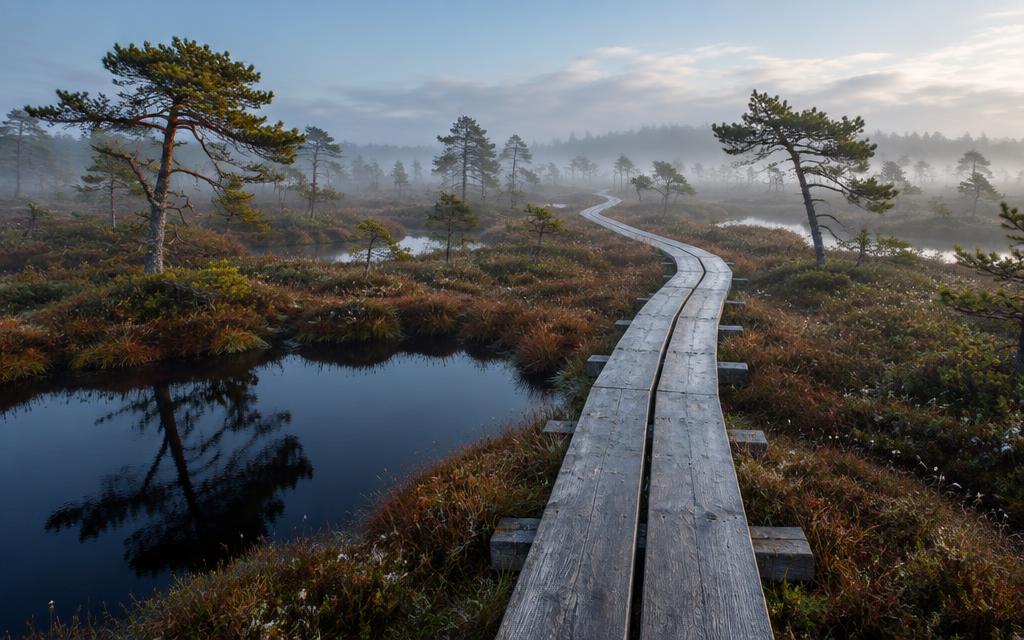
Mid-morning
Hiking the bogs at the day's warmest hour
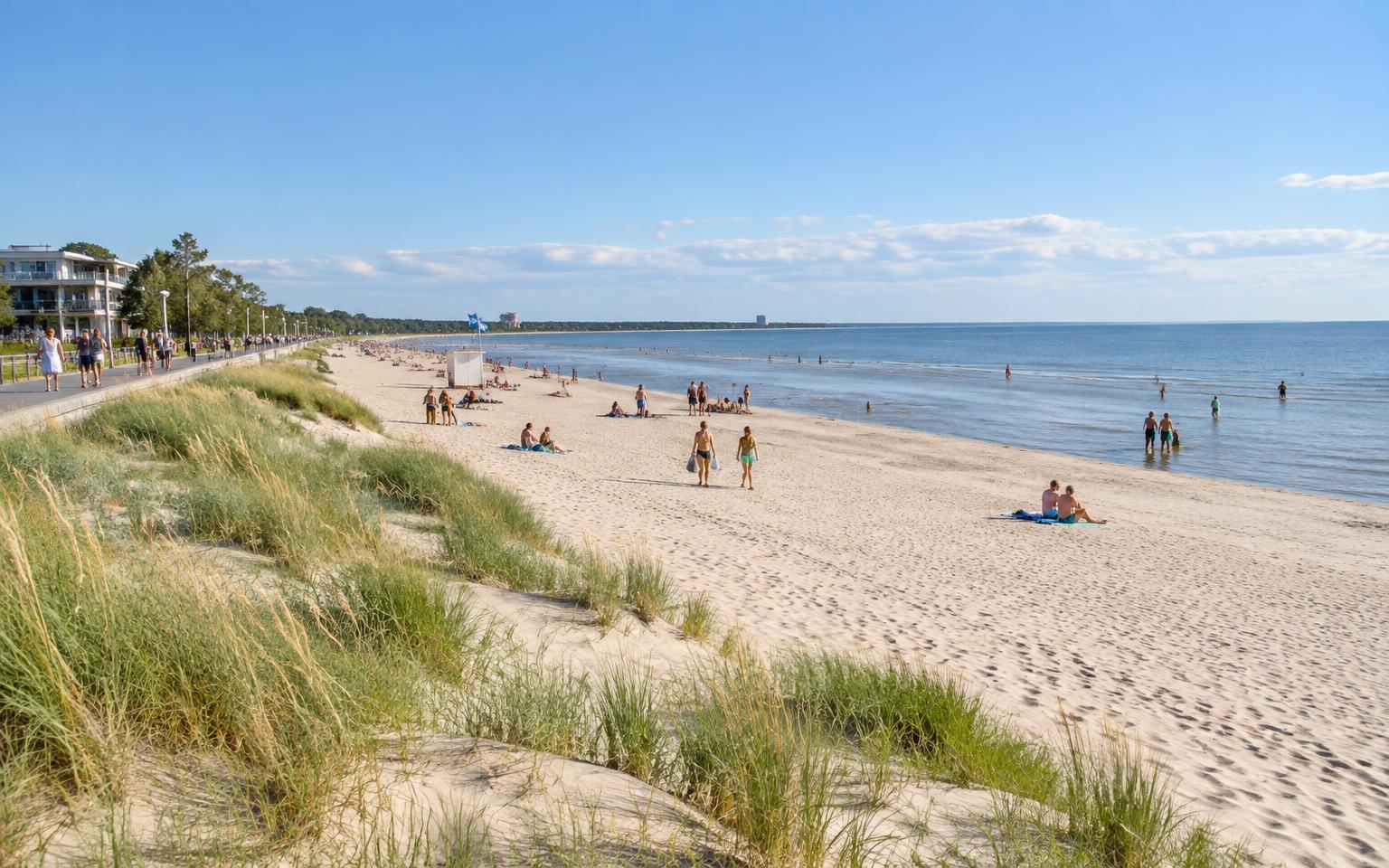
Late evening
Pärnu: beach days in the summer capital
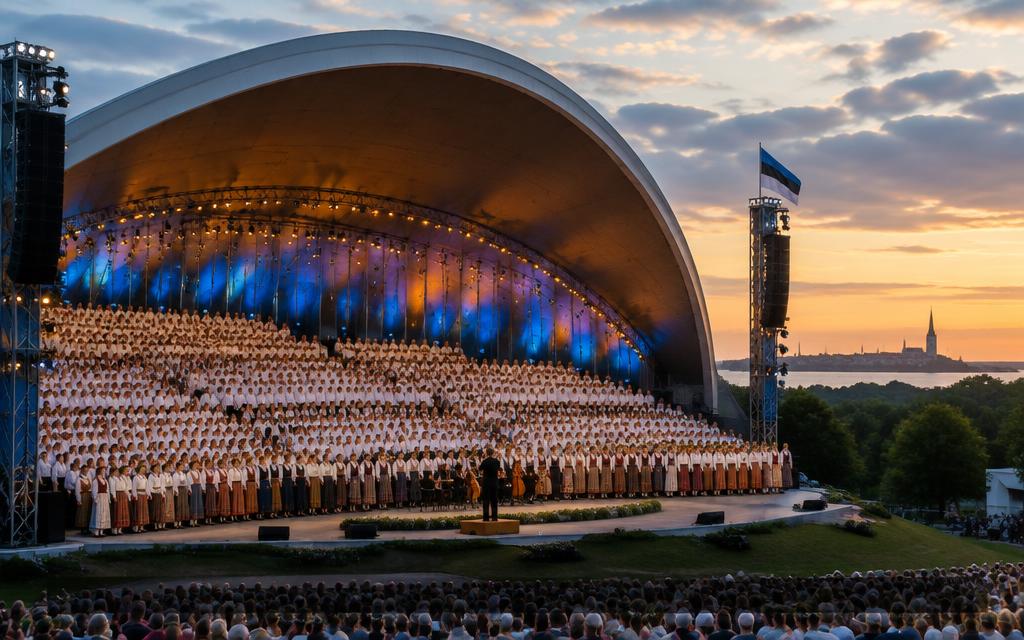
The culture
A summer measured in song, not shade
When to come
June – AugustThe sweet spot runs from mid-June to late August. Bring a light jacket for evenings by the sea — and leave the heat tolerance at home.
Convinced? Come feel 19° in July.
Start with what to do — bogs, saunas, old towns and islands.